Dayton View Triangle’s median sale price jumped 40% year over year — the sharpest move of any established Dayton neighborhood we track — on just five active listings. Here is what is driving it and what you should know before buying in.
Dayton View Triangle is a historic neighborhood in northwest Dayton, and it is having the kind of year that makes people pay attention: a median sale price of $170,000, up roughly 40% from the year before, against about five active listings and two months of supply.
Those two numbers together tell the story. Demand is real, and there is almost nothing to buy.
What Dayton View Triangle Actually Is
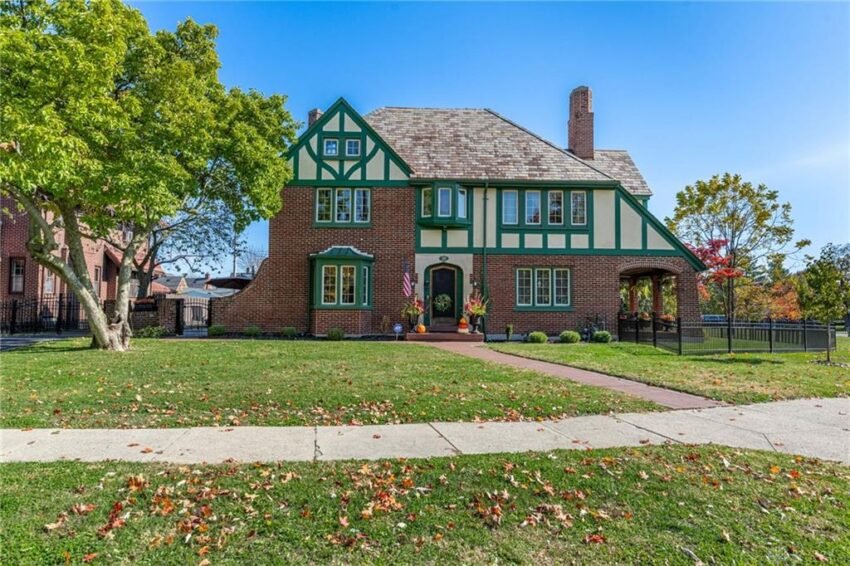
This is one of the most architecturally varied neighborhoods in the city. Tree-lined streets carry Tudors, English cottages, Georgians, colonials, American Foursquares, Dutch Colonials, bungalows, ranches and the occasional Mediterranean-influenced design — most from the early-to-mid 20th century.
Crucially, many have kept their original details: hardwood floors, exposed beams, distinctive roof lines. These were built with permanence in mind, and a lot of that survived.
The neighborhood also has an active Dayton View Triangle Federation supporting preservation work and regular events. That matters more than it sounds — organized neighborhoods defend property values and hold developers to a standard.
What Homes Cost in Dayton View Triangle
| Median sale price | $170,000 — up ~40% year over year |
| Median list price | $189,950 |
| Median single-family price | $179,000 |
| Active listings | ~5 |
| Months of supply | ~2 — a seller’s market |
A 40% move deserves scrutiny rather than excitement. With only five listings, the median is calculated on a small number of sales, and a handful of high-end closings can swing it hard. Treat it as a strong directional signal, not a precise measurement of what your specific house gained.
What is not ambiguous: the top of this market is climbing. 1727 Harvard Boulevard — a 1928 Tudor with refinished hardwoods, a gas fireplace and a dedicated home office — closed at $275,000. That is well above the neighborhood median and shows what a well-preserved historic home commands here now.
Why This Neighborhood Is Moving
Three things are converging.
The architecture is genuinely underpriced. Comparable Tudors and Georgians with similar lot sizes cost considerably more in other historic Dayton neighborhoods and in the suburbs. Buyers who know what they are looking at have noticed the gap.
The buyer profile is unusual. 40.5% of residents are college graduates — roughly double the rate in many surrounding neighborhoods — with an average household income near $71,748. This is not a speculative investor market. It is owner-occupants, 58% of them, buying houses they intend to keep.
Supply is genuinely scarce. Five listings in an entire neighborhood is not a market with slack in it.
Is Dayton View Triangle a Good Place to Live?
It suits you if you specifically want a historic house with original character, you value an organized and engaged neighborhood, and you are willing to move quickly and decisively when something lists.
It suits you less if you need to be able to walk to shops and restaurants. The neighborhood rates as car-dependent, though it is bikeable with some transit. Businesses line Salem Avenue, but most shopping, dining and entertainment is a short drive rather than a walk.
Parks, Schools and Getting Around
Salem Avenue is the spine, giving a direct route to downtown Dayton, Interstate 75 and Kettering Health Dayton. Commutes are easy.
There are six parks, including ZAPP Park, Omega Campus, Salem Heights Playground and Princeton Park — the last with sports facilities and the Northwest Recreation Center.
Students attend Dayton Public Schools, with private and charter options nearby. Fairview Elementary sits just north of the neighborhood, close enough that some children walk or bike.
The Honest Risks
- The 40% figure is fragile. Small sample, few sales. Do not underwrite a purchase on the assumption it repeats. It signals direction, not a rate of return.
- Historic homes carry historic costs. Original windows, plaster, slate or tile roofs, knob-and-tube wiring and old boilers are all realistic. The charm and the capital expenditure arrive together. Budget for both.
- Almost nothing is for sale. With five listings, waiting for the perfect house could take a year. Buyers here need patience and then sudden decisiveness.
- Car-dependent. If walkability is a hard requirement, look at Belmont or the Oregon District instead.
- Condition varies enormously. Some of these houses have been lovingly maintained for a century; others were rentals for thirty years. The same floor plan can be $80,000 apart in work needed.
Common Questions About Dayton View Triangle
Is Dayton View Triangle the same as Dayton View?
They are related but not identical. “Dayton View” refers to the broader historic area northwest of downtown; the Triangle is a distinct neighborhood within it, with its own federation and identity.
Is it a good investment?
The conditions are supportive — scarce supply, high owner-occupancy, an educated buyer base, and architecture that is cheap relative to comparable stock elsewhere. None of that is a guarantee, and the 40% figure should not be treated as a forecast.
What style of house will I actually find?
Realistically: Tudors, Foursquares, Dutch Colonials and bungalows, most built between roughly 1910 and 1950, many with original interior detail intact.
How does it compare to Wolf Creek?
Nearly opposite. Wolf Creek is a buyer’s market with 19 months of supply and substantial new construction. Dayton View Triangle is a seller’s market with two months of supply and essentially no new building — you are buying history here, not a new build.
Can I walk to anything?
Salem Avenue businesses, yes. Most else, no. Plan on driving.
Dayton View Triangle is what happens when a neighborhood with real architecture, an organized civic core and an educated owner-occupant base finally gets noticed. The 40% number will not repeat every year. The reasons behind it — the houses, the federation, the Salem Avenue access, the scarcity — are structural, and those are not going anywhere.
The hard part is finding one for sale.
Market data compiled from Dayton REALTORS® MLS and public neighborhood data. Information deemed reliable but not guaranteed. This article is general information, not financial or investment advice.