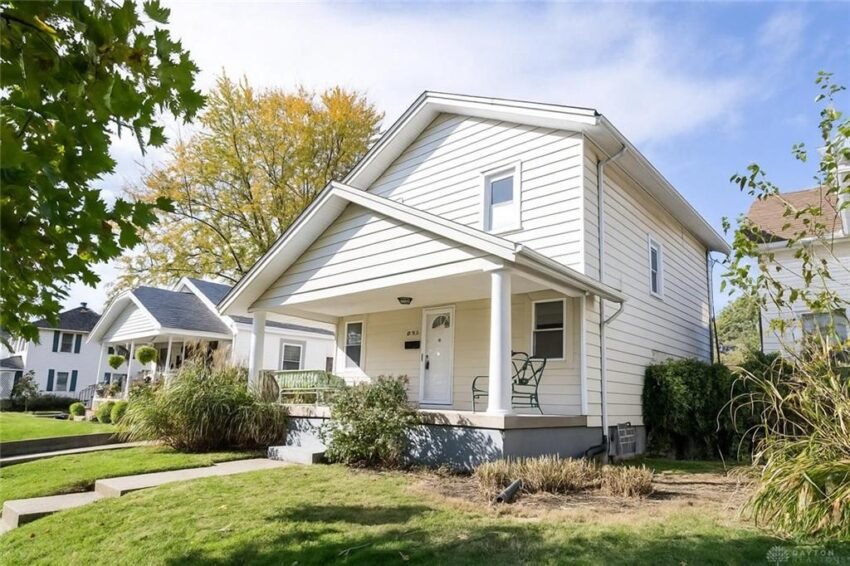
Belmont is one of the tightest housing markets in Dayton — about one month of supply, 25 listings, and homes selling above asking. Here is what it costs, what you get, and who it actually suits.
If you have been reading our coverage of West Dayton, Belmont is the counterweight. Where Wolf Creek is a buyer’s market carrying 19 months of supply, Belmont is the opposite problem: roughly one month of supply across about 25 active listings. Homes that are priced right do not sit.
This is a practical guide to buying or renting in Belmont — the numbers, the housing stock, the schools, and the parts that do not show up on a listing site.
What Belmont Actually Is
Belmont sits in southeast Dayton, built out largely between the 1900s and the 1950s. Residential streets carry mature trees and a genuine mix of architecture: American Foursquares, bungalows, Dutch Colonials and a meaningful number of duplexes.
The neighborhood is organized around a concentrated business district that residents call “downtown Belmont” — local restaurants alongside chains and corporate retail. That commercial core is unusual. Most Dayton neighborhoods of this size do not have one, and it is a large part of why Belmont holds value.
There is an annual block party. People know their neighbors. That sounds like a brochure line, but it shows up in the numbers: 58% of the market is owner-occupied, and the median resident age is 43 — an established, settled population rather than a transient one.
What Homes Cost in Belmont
| Median sale price | $163,000 (up 2% year over year) |
| Median list price | $167,000 |
| Median single-family price | $165,000 |
| Active listings | ~25 |
| Months of supply | ~1 — a seller’s market |
That 2% year-over-year figure is the one people misread. Compared with neighborhoods posting 20% and 40% jumps, Belmont looks flat. It isn’t stagnant — it’s stable. Belmont was never cheap enough to crash and never speculative enough to spike. It has simply held.
Stability is the product here. If you want appreciation upside, Belmont is not where you will find the biggest number. If you want to buy a house that will be worth roughly what you paid plus normal growth when you sell it, that is precisely what Belmont has done for decades.
What One Month of Supply Means for a Buyer
Six months of supply is considered balanced. Belmont has about one.
Practically, that means: fewer choices, faster decisions, and very little negotiating room on a well-presented house. Come pre-approved. Expect to see a home within days of listing rather than weeks. Expect competition on anything updated.
A concrete example from our own reporting: 2737 Whittier Avenue closed in December 2025 at $215,000 — above its $209,000 list price, after 44 days on market. A 1950 build, three bedrooms, two baths, 1,472 square feet, with a 2021 roof and new carpet.
Note what earned that result. Not luxury finishes — condition. A newer roof, clean flooring, a functional layout and two full baths. In older housing stock, two full bathrooms is consistently what separates a strong sale from a slow one.
Is Belmont a Good Place to Live?
For a specific kind of buyer, yes, clearly.
It suits you if you want an established neighborhood with a walkable commercial district, real parks, a short commute, and a house that holds its value — at a price well under the suburbs. Average household income is about $65,861. The crime score sits at 4, on par with the national average — genuinely middle-of-the-road, not a euphemism.
It suits you less if you want new construction, a large lot, or a bargain. Belmont has essentially no new inventory, lots are modest at 7 people per acre, and the tight supply means you will pay close to asking.
Parks, Trails and Getting Around
Belmont has eight parks, and the anchor is substantial: Belmont Park covers 55 acres with trails, sports facilities and disc golf. That is a real park, not a playground with a bench.
The Iron Horse Trail runs 19 miles, connecting Belmont into Dayton and Kettering — genuinely useful for commuting by bike, not just recreation.
Highway 35 gives direct access to regional employment centers. The neighborhood rates as somewhat walkable and bikeable with some transit service; you will still want a car, but you will not need it for every errand.
Schools
Belmont is served by Dayton Public Schools, and many students can walk — a real quality-of-life factor that gets undervalued. Belmont High School is widely recognized locally for community involvement. There is also a charter academy and a Catholic private school in the area.
As always, check the current attendance boundary for a specific address rather than assuming, and look at the most recent report cards yourself.
The Honest Risks
- Condition varies widely, house to house. Some properties are fully renovated; others have solid structure and completely dated interiors. Two homes on the same block can be $60,000 apart in needed work. Inspect thoroughly.
- You will not steal a house here. One month of supply means sellers hold the leverage. Budget for paying at or near list.
- Older housing stock means older systems. Most homes date to the early-to-mid 1900s. Knob-and-tube wiring, original galvanized plumbing and aging sewer laterals are all live possibilities. Get a sewer scope.
- Appreciation is modest. 2% year over year. If your plan depends on rapid equity growth, this is the wrong neighborhood — look at Dayton View Triangle or Wolf Creek instead.
- Duplexes affect the block. There is a meaningful amount of two-family stock. That is an opportunity for house-hackers and a consideration for anyone wanting an all-owner-occupied street.
Common Questions About Belmont
Is Belmont safe?
Its crime score is 4, described as on par with the average American neighborhood. Not the safest in the metro, not a problem area — genuinely average, with the usual block-by-block variation.
How does Belmont compare to Oakwood?
Comparable early-20th-century architecture at a substantially lower price. Oakwood carries the school district, the prestige and the tax bill. Belmont gives you similar houses and similar trees for meaningfully less money.
Is Belmont walkable?
Somewhat. The “downtown Belmont” business district is the reason it rates better than most Dayton neighborhoods — there is somewhere to actually walk to.
Is it a good rental market?
46% of residents rent, and there is real duplex inventory, so demand exists. Run your own numbers on a specific property; a 1-month-supply market means acquisition costs are not discounted.
What should I offer?
In a market this tight, on a well-maintained home, at or near asking is realistic. Our Whittier Avenue example closed above list.
Belmont does not make headlines. It has no boom narrative and no dramatic year-over-year number to point at. What it has is a business district, a 55-acre park, a 19-mile trail, walkable schools, and thirty years of holding its value through every cycle Dayton has thrown at it.
For a lot of buyers, that is worth more than upside.
Market data compiled from Dayton REALTORS® MLS and public neighborhood data. Information deemed reliable but not guaranteed. This article is general information, not financial or investment advice.