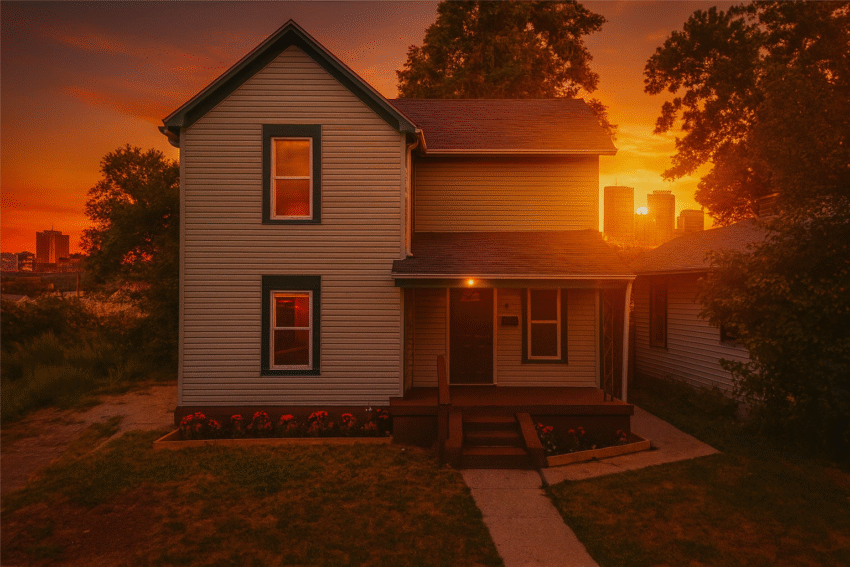
Westwood has always been one of Dayton’s most complex neighborhoods—full of history, architectural character, and long-standing residents who’ve called the area home for decades. But in 2025, something different is happening. Investors, homeowners, and even regional developers are starting to look at Westwood again with renewed interest.
And the surprising part? It’s not because Westwood is suddenly being “discovered.” It’s because many people are finally recognizing what has always been there: a stable, well-built, thoughtfully designed community that still has the essential bones of a great neighborhood.
A Neighborhood With More Stability Than People Think
While Westwood has certainly experienced its share of economic challenges, one of the overlooked truths about this area is that large pockets of the neighborhood have never been severely blighted. Many streets—especially throughout the center of Westwood—are lined with long-term homeowners, well-maintained homes, mature trees, and quiet blocks with low turnover.
These are the parts of Westwood that rarely make headlines. Yet they are exactly the areas that investors in 2025 are finally rediscovering.
The myth has always been that Westwood is entirely distressed. The reality is that much of Westwood is a stable, established neighborhood, with families who have lived in their homes for generations. That kind of deep community connection is rare—and valuable.
Westwood Was Originally a Master-Planned Community — and It Shows
Before suburban-style developments spread across Dayton’s outskirts, Westwood was one of the city’s earliest examples of a truly master-planned community. Unlike many neighborhoods that evolved gradually over time—with streets added piecemeal and homes built without a cohesive structure—Westwood was intentionally designed from the beginning.
The planners of the era were thinking about everyday life: how families moved through their neighborhood, where children played, how far people should walk to reach school, and how connected each block should feel to the next. That vision still shapes Westwood today, and it’s one of the biggest reasons why investors are taking a second look.
Walkability: A Feature Built Before Walkability Was “Trendy”
In the early and mid-20th century, Westwood was designed around the assumption that families would walk—to church, to school, to neighbors’ homes, and even to local shops. As a result, sidewalks line both sides of nearly every street, creating a pedestrian-friendly environment that many modern suburbs lack.
Today, walkability is often marketed as a premium amenity in new developments. But Westwood has had it for generations.
These sidewalks do more than help people get around:
- They encourage neighbor-to-neighbor interaction
- They increase passive visibility and reduce anonymity on the street
- They make the area attractive to families and seniors
- They support long-term livability and community pride
Investors have always known that “walkable neighborhoods” retain value. Westwood has quietly been one of Dayton’s most walkable areas for nearly a century.
Parks and Playgrounds: Built-In Green Space for Real Community Life
Westwood’s original design included small parks, playgrounds, and pockets of green space woven directly into the neighborhood grid. These spaces were not decorative—they were intentional gathering points for families and children.
Generations of Westwood residents can tell stories about growing up playing in these parks, walking to them after school, or using them as the backdrop for block gatherings and community events.
For modern buyers and investors, parks offer:
- Built-in stability for surrounding home values
- A sense of neighborhood identity
- More attractive blocks for families and long-term renters
- A visual buffer that makes streets feel open and well-spaced
Many Dayton neighborhoods lack this breadth of accessible green space. Westwood, by contrast, was planned with it from the start.
Embedded Schools: Neighborhood Anchors That Strengthened Community Cohesion
In many parts of West Dayton, schools were originally positioned inside the neighborhood rather than on the edges of it. Westwood is no exception. Schools historically served as:
- Community hubs
- Voting locations
- Places for meetings, sports, and recreation
- Landmarks that created identity within the neighborhood’s sub-sections
Even as Dayton’s school landscape has changed, the structure of Westwood—where schools sit inside the community fabric—still has lasting effects. Homes near former or current school sites often experience:
- More neighborhood stability
- Stronger block cohesion
- Better long-term resale value compared to unanchored areas
For investors, these micro-anchors create pockets of opportunity that align with long-standing community patterns.
An Intentional Street Grid Designed for Community, Not Cars
While many newer suburbs feature winding cul-de-sacs and disconnected streets, Westwood was designed with an interconnected, walkable grid. This structure promotes:
- Easier navigation
- Better visibility from block to block
- A more active street life
- Natural traffic calming (slower-moving residential roads)
- Stronger community interaction
The grid also allows for better long-term infrastructure planning—water, sewer, lighting, and transportation improvements tend to be easier and more cost-effective in neighborhoods built with intentional alignment.
For investors, the grid layout is a hidden asset. Renovated homes “fit” the neighborhood pattern, rents stabilize more quickly, and long-term appreciation benefits from the predictable, cohesive layout.
Why This Master Planning Matters in 2025
In a city where some neighborhoods grew organically and others experienced severe disinvestment, Westwood’s underlying structure gives it a built-in advantage:
- You don’t have to recreate walkability. It already exists.
- You don’t have to add parks. They’re already there.
- You don’t have to hope for neighborhood anchors. The structure was built around them.
- You don’t have to retrofit connectivity. The grid has done the work.
This is why the investor interest in Westwood isn’t random—it’s structural. Westwood has good bones, not just in its homes but in its very design.
Strategic Location Near Wright Dunbar and Third Street
Another major factor driving investor interest is location. Westwood offers fast, direct access to Wright Dunbar, downtown Dayton, and major redevelopment zones via Third Street.
Residents are minutes from restaurants, cafés, local shops, studios, and the historic Wright Brothers district. Wright Dunbar is becoming one of Dayton’s highest-momentum neighborhoods, and Westwood is positioned directly in the path of that growth.
For a deeper look at the Wright Dunbar trend, see this article:
Home Prices That Still Offer a True Entry Point
Dayton’s overall market has climbed in recent years, but Westwood remains one of the few neighborhoods where first-time buyers, owner-occupants, and investors can still acquire properties at accessible price points. The neighborhood offers strong yields, predictable rents, and a housing stock that supports long-term improvement.
The Neighborhood’s Future Is Starting to Take Shape
Westwood isn’t a neighborhood being rebuilt—it’s a neighborhood being rediscovered. More reinvestment, stronger comparables, and renewed confidence are beginning to chart a new trajectory for this historic community. Check out this local comparable sale from Jefferson Township.
Final Thoughts
Investors are looking at Westwood again because they’re finally seeing what longtime residents have always known: it’s stable, walkable, well-designed, centrally located, and full of the kind of housing stock that makes Dayton unique. The renewed interest is not speculation—it’s recognition.
As Westwood continues to benefit from momentum in nearby Wright Dunbar and other West Dayton neighborhoods, 2025 may be remembered as the year this community’s next chapter truly began.